

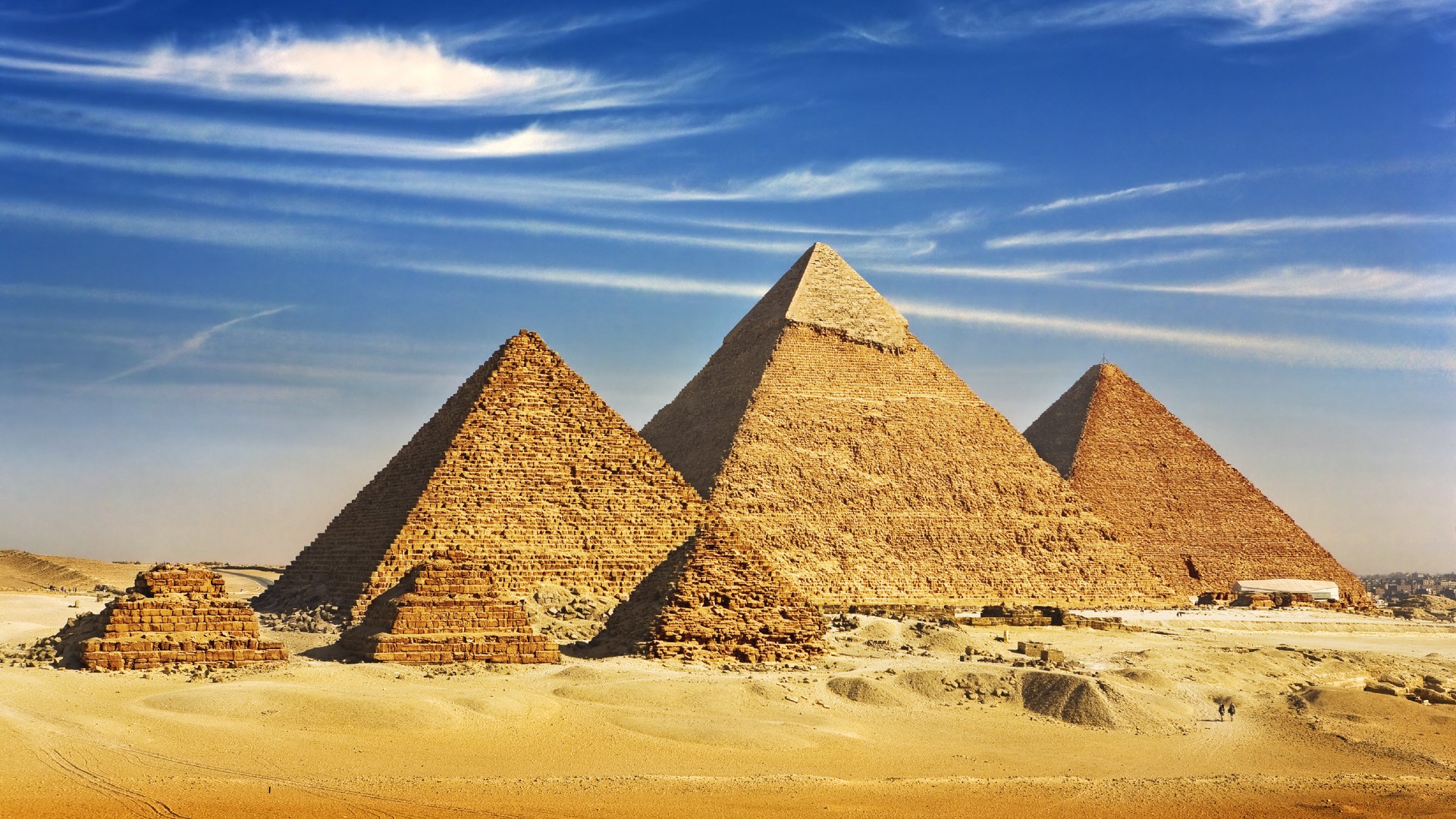
Pyramids of Giza
The Pyramids of Giza are ancient royal tombs on the Giza Plateau near Cairo, Egypt, built for Pharaohs Khufu, Khafre, and Menkaure during Egypt's Old Kingdom (Fourth Dynasty, c. 2600–2500 BC), featuring the Great Pyramid (Khufu's tomb, the largest and oldest) and Khafre's pyramid, flanked by the Great Sphinx and other structures, forming a UNESCO World Heritage site and the last surviving Wonder of the Ancient World.
Key Pyramids
- Great Pyramid of Giza (Khufu): The oldest, largest, and first to be built, serving as the tomb for Pharaoh Khufu (Cheops).
- Pyramid of Khafre: Khufu's son, Khafre (Chephren), built the middle pyramid, which appears taller due to its higher location and steeper angle.
- Pyramid of Menkaure: The southernmost and smallest of the three, built for Khafre's son, Menkaure (Mykerinus).
Pyramids of Giza
The Giza Complex
Each pyramid was part of a larger complex, including:
- Subsidiary Pyramids: Smaller pyramids for queens.
- Temples: Mortuary temples near the pyramids and valley temples near the Nile.
- Causeways: Long, decorated pathways connecting the temples.
- Other Tombs: Mastabas for nobles and family members, boat pits, and the Great Sphinx.
Significance
Pyramids of Giza
- Afterlife Tombs: Built as elaborate tombs to ensure the pharaoh's successful journey to the afterlife.
- Ancient Wonder: The Great Pyramid is the only one of the Seven Wonders of the Ancient World still standing.
- Engineering Marvel: Showcases the advanced architectural and engineering skills of the ancient Egyptians, who used ramps, levers, and immense labor.
Location
- Situated on the Giza Plateau on the west bank of the Nile River, on the outskirts of Cairo, Egypt

Comments