

Karnak Temple
Karnak Temple: Exploring the World’s Largest Ancient Religious Site
Walking through the gates of Karnak is like stepping into a different dimension. As the primary place of worship for the Theban Triad—Amun-Ra, Mut, and Khonsu—this massive complex in Luxor remains the most awe-inspiring achievement of ancient Egyptian architecture.
1. The Great Hypostyle Hall: A Forest of Stone
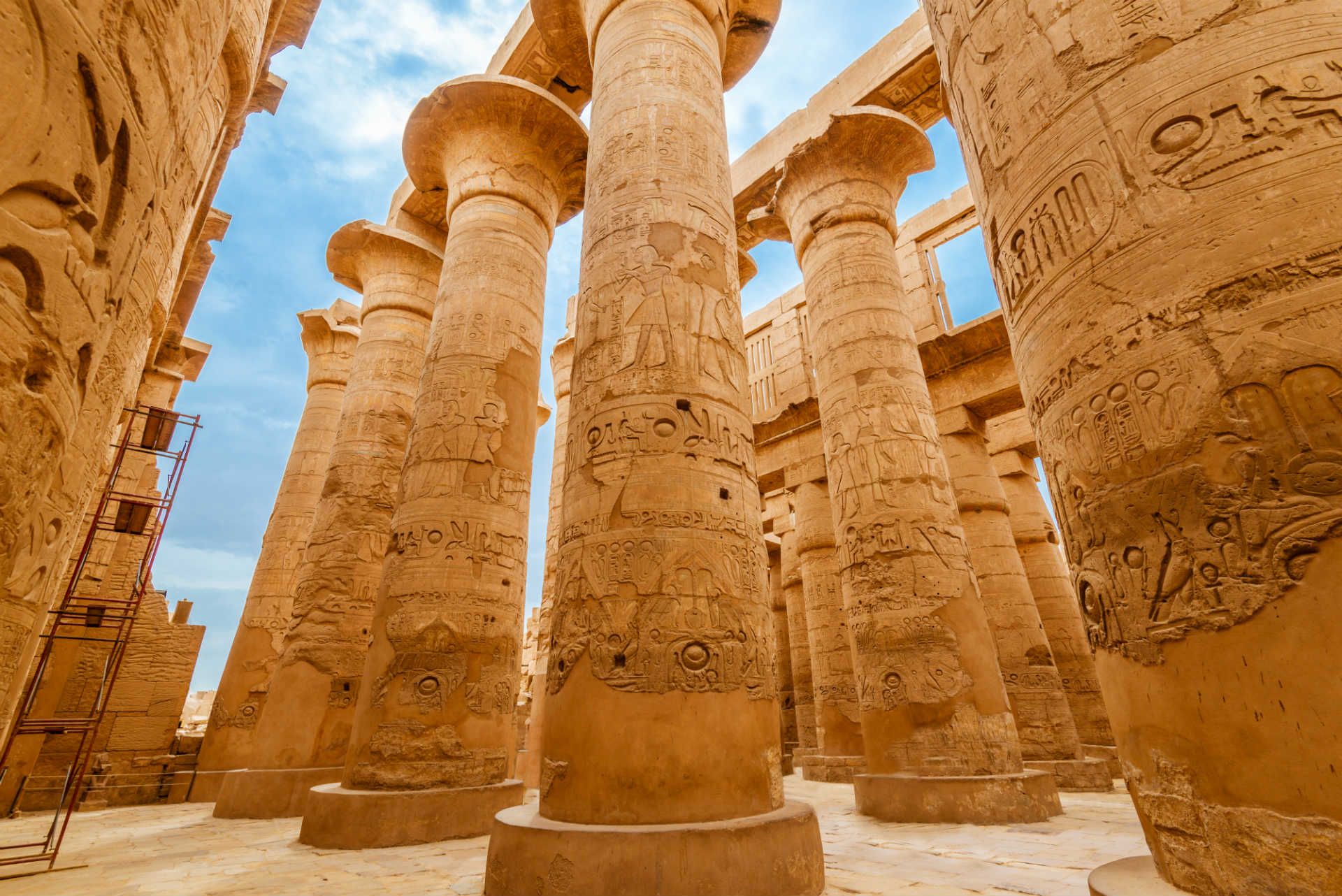
The crown jewel of Karnak is the Great Hypostyle Hall. Covering an area of 5,000 square meters, it contains 134 massive sandstone columns arranged in 16 rows. The central columns tower at 21 meters high, decorated with intricate hieroglyphs that still retain some of their original 3,000-year-old colors.
Karnak Temple
2. The Avenue of Sphinxes (Kebash Road)
Recently restored and opened in a grand global ceremony, the Avenue of Sphinxes connects Karnak Temple to Luxor Temple. Spanning 2.7 kilometers, this ancient processional path is lined with hundreds of sphinx statues, offering a breathtaking walk through history.
3. The Sacred Lake and the Giant Scarab
Beyond the towering pylons lies the Sacred Lake, where priests once purified themselves before rituals. Nearby, you’ll find the giant Granite Scarab statue of Amenhotep III; local legend says that circling it seven times will bring good luck and grant your wishes.
Karnak Temple
4. Obelisks that Touch the Sky
Karnak is home to the tallest surviving ancient obelisk in Egypt, belonging to Queen Hatshepsut. Carved from a single piece of pink granite, it stands at nearly 30 meters, representing a miraculous feat of ancient engineering and transport.
As night falls, Karnak transforms. The Sound and Light Show narrates the history of Thebes and the building of the temple through dramatic lighting and storytelling, making it a must-see evening activity for families and history buffs.

Comments